
The deepest shifts aren't always about technology or markets; often, they’re about how we grapple with internal and external forces to shape our lives and the world around us.
📊 12 episodes across 10 podcasts
⏱ 958 minutes of intelligence analyzed
🎙 Featuring: Andrew Huberman, Dr. Oded Rechavi, Oded Rechavi, Huberman, Andrew Huberman, Jared Rutter, Dr. Jared Rutter, Josh Rabinowitz, Tamler Sommers, David Pizarro, Adam Grant, Topher Payne, Vanessa Bohns, Mel Robbins, Gary Vaynerchuk, Frank Siller, Coleman Hughes, Glenn Loury, Robert Patton-Spruill, Glenn, Tanya Luhrmann, Curt Jaimungal, Jordan Peterson, Mikhaila Peterson, Hidden Brain, Shankar Vedantam, Anthony Klotz, Arp Dijksterhuis, Tess Chakkalakal, John McWhorter, Robert Paton, Mark Lilla, Chris Williamson, Dr Gabrielle Lyon, Ben Greenfield, Brigham Buhler, Josh Perry
|

The Big Shift
This week, a compelling undercurrent in the conversations points to a re-evaluation of individual agency in an increasingly complex and seemingly uncontrollable world. From the psychological roots of 'crashing out' to the biological inheritance of acquired traits, the narrative shifts from passive acceptance to active, intentional influence.
The traditional view: We are products of our genes, our environment, and systemic forces beyond our reach. This can lead to a feeling of 'impotence,' as observed by David Pizarro (Host, Very Bad Wizards) in his discussion on the term 'crashing out,' where he noted, "I think it's connected to this feeling of impotence. But for that exact reason, like you said, you're gonna lose respect for them because it shows that they don't have power. They don't have power in the situation over the situation or over themselves."
The emerging reframe: While external pressures are real, there's a growing emphasis on the profound, often unrecognized, power of individual choices—not just for one's own life, but potentially for future generations. This isn't just about self-help; it's about a deeper understanding of how our actions, from managing our metabolism to setting boundaries, ripple outward.
Why it matters: Leaders operating in dynamic environments must cultivate not only their own sense of agency but also empower it within their teams. Understanding the psychological and even biological mechanisms of control—and where we can truly exert it—is critical for navigating uncertainty and fostering resilience. If our ancestors' experiences can shape our biology, what are we passing on through our present actions?
"What I'm intoxicated by why I exist in public is my belief is that people are obnoxiously more capable of changing than they realize. And it's actually shockingly simple and the hardest thing in the world."
— Gary Vaynerchuk, Chairman of VaynerX on The Mel Robbins Podcast
The takeaway: The subtle interplay between external forces and internal resilience is not merely philosophical; it's a practical challenge with profound implications for how we lead, build, and sustain.
The Rundown
① Generational trauma and learned behaviors can be inherited not just psychologically, but biologically.
New research suggests small RNAs can transmit information across generations, challenging the "Weismann barrier" and potentially affecting traits like food-seeking behavior for multiple generations. (Dr. Oded Rechavi on Huberman Lab with listen link)
→ The insight: This redefines 'legacy' in a biological sense, suggesting that parental interventions like exercise could epigenetically correct 'aberrant inheritance,' opening avenues for future diagnostics and preventative measures in human health.
② Modern societal feelings of powerlessness manifest as a new emotional state called 'crashing out.'
Distinct from a 'meltdown,' 'crashing out' reflects a disempowerment in the face of uncontrollable external factors like government and AI, where individuals lose restraint without the empowering anger of a traditional outburst. (David Pizarro on Very Bad Wizards with listen link)
→ The read-through: Recognizing this psychological state in teams and clients is crucial; it signals a fundamental erosion of perceived control that traditional responses like blaming or problem-solving might not address, demanding empathy and strategies to restore agency.
③ Effective boundary-setting, often perceived as selfish, is a critical act of self-respect that can paradoxically earn greater respect from others.
Adam Grant argues that 'saying no' gracefully—while conveying care and offering alternatives—prevents emotional exhaustion and fosters healthier, more reciprocal relationships. (Adam Grant on Worklife with Adam Grant with listen link)
→ The application: Leaders should model and encourage judicious boundary-setting within their organizations to combat burnout and cultivate a culture of mutual respect, understanding that a "clear, fast no" can be more productive than a reluctant, drawn-out yes.
④ Individual failure to "aim up" and take responsibility for self-governance can lead to societal totalitarianism.
Jordan Peterson interprets biblical narratives like Jacob and Esau to illustrate that the vacuum created by individual moral immaturity and hedonism will be filled by external, often tyrannical, control. (Jordan Peterson on The Jordan B. Peterson Podcast with listen link)
→ The challenge: This framework suggests that organizational health and societal resilience are deeply intertwined with individual moral development and a commitment to personal accountability, urging leaders to foster environments that encourage continuous self-improvement and responsibility.
⑤ Many people who identify as religious actively grapple with profound doubt, challenging the assumption of certainty in faith.
Tanya Luhrmann observes that college religious studies classes can be more faith-disturbing than science classes for young believers, as exposure to other sophisticated traditions complicates their own beliefs. (Tanya Luhrmann on Theories of Everything with Curt Jaimungal with listen link)
→ The parallel: In business, certainty can be a dangerous illusion. This insight underscores the value of intellectual humility and the ongoing process of questioning even deeply held beliefs, suggesting that a leader's ability to navigate ambiguity and engage with conflicting frameworks is a sign of maturity, not weakness.
Signal Board
🔥 Heating Up
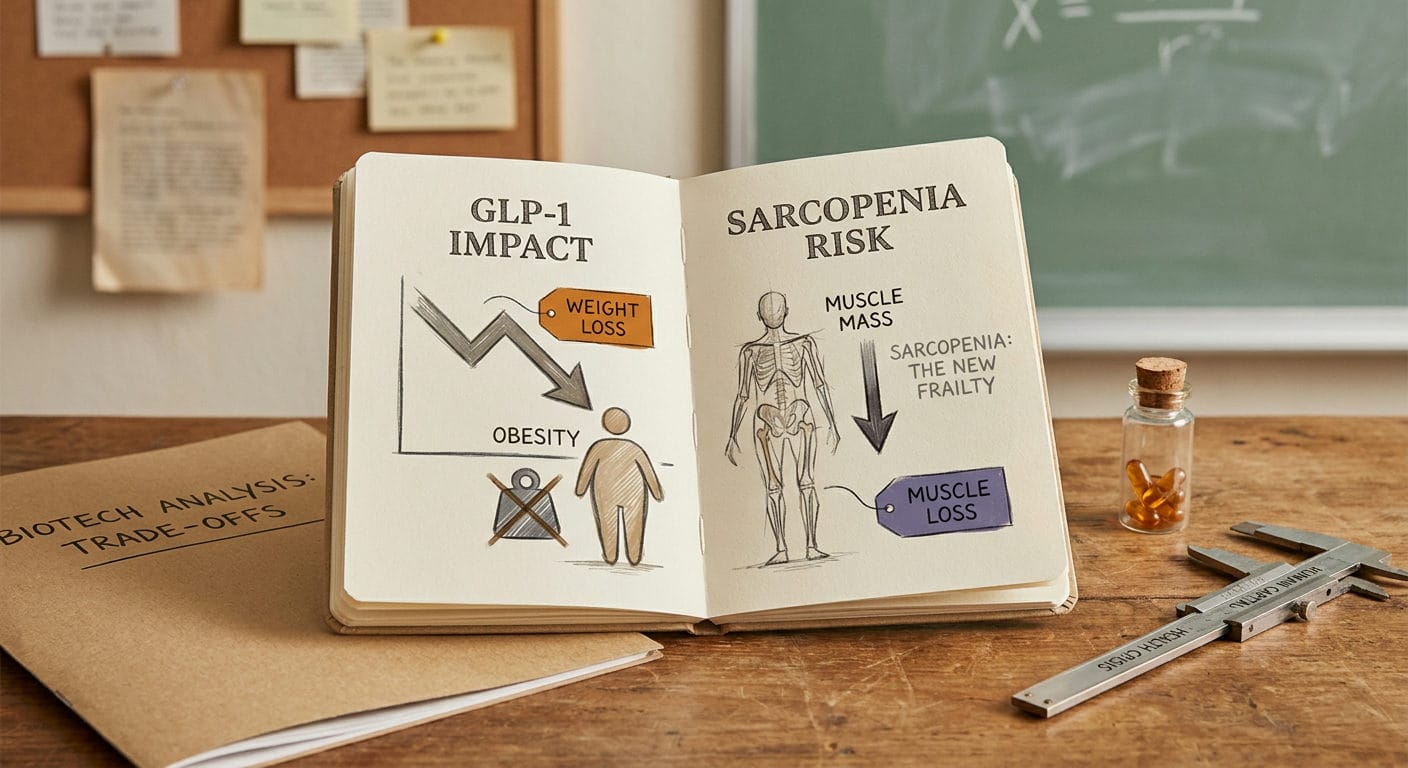
• GLP-1s and muscle loss (sarcopenia): Widespread use of GLP-1 drugs for weight loss is raising concerns about a potential 'sarcopenic epidemic' due to significant muscle loss, underscoring the critical need to maintain lean muscle mass for longevity. (Dr Gabrielle Lyon on Modern Wisdom)
• MUSE stem cells: These "super soldiers" of stem cells, unlike traditional ones, can survive for days at room temperature and have a 30% engraftment rate, making them a significant advancement in regenerative medicine. (Josh Perry on Modern Wisdom)
• Correlation between unpredictability and superstition in sports: George Gmelch's 'Baseball Magic' study highlights how the greater the element of chance in a sport, the more prevalent the practice of superstition, a psychological coping mechanism. (Tamler Sommers & David Pizarro on Very Bad Wizards)
👀 On Watch
• Charles Chesnutt 🆕: The first professional African American writer's work and philosophical opposition to validating racial divisions are being re-examined in contemporary racial discourse, highlighting his enduring relevance. (Tess Chakkalakal on The Glenn Show)
• Anthony Klotz 🆕: The psychologist's work on 'jolts' reveals that about half of all job quitting decisions result from sudden, singular events that prompt fundamental life changes, rather than slow, rational processes. (Anthony Klotz on Hidden Brain)
• Aiming Up 🆕: Jordan Peterson's framework advocating for continuous moral striving, responsibility, and the sacrifice of immaturity to climb Jacob's Ladder towards a moral framework. (Jordan Peterson on The Jordan B. Peterson Podcast)
🧊 Cooling Off
• Blame vs. Accountability (Parents/Past) 🆕: Gary Vaynerchuk challenges the pervasive tendency to blame past circumstances or parenting for current struggles, advocating for radical personal accountability to overcome fear of judgment and drive change. (Gary Vaynerchuk on The Mel Robbins Podcast)
• Redlining not sole cause of current housing problems 🆕: Robert Patton-Spruill argues that community resistance and internal dynamics, rather than exclusively external racism, often impede housing development and economic progress in Black neighborhoods. (Robert Patton-Spruill on The Glenn Show)
• FDA peptide ban controversy: The FDA's ban on compounded peptides is creating gray and black markets, raising concerns about access to potentially beneficial therapies and the unintended consequences of regulatory overreach. (Brigham Buhler on Modern Wisdom)
The Tension
This week, a fascinating tension emerged around the nature of racial progress and the primary obstacles to advancement within communities.
🔵 One view: External systemic barriers are the primary impediment. The prevailing narrative, exemplified by the documentary 'Removed: Black Erasure in Boston,' often attributes housing issues and lack of progress in Black communities primarily to historical racism and redlining. This perspective sees external forces as the fundamental cause. As Tess Chakkalakal (Professor of Africana Studies and English, Bowdoin College) noted in a different context discussing Charles Chesnutt's work on The Glenn Show, historical accounts often highlight the impact of systemic injustice.
🔴 The counter: Internal dynamics and resistance can be equally, if not more, significant.Robert Patton-Spruill (Co-producer, The Glenn Show) offers a contrarian view, arguing that internal community resistance to development and a philosophical aversion to 'capitalism' often impede progress more than external racism. He states, "And she clearly chose not to because it didn't line up with that narrative that we've been told over and over again that the reason why the hood is a ghetto is because of what white folks did to us." Patton-Spruill emphasizes that Black residents migrated to other growing cities, and that resistance to projects like the White Stadium redevelopment, despite community benefits, stems from misguided ideology.
What's at stake: For leaders attempting to drive development or foster growth in any community, understanding whether the primary obstacles are external, internal, or a complex interplay, fundamentally alters the strategy for intervention and investment.
The Bookshelf
Magic, Science, and Religion by Bronisław Malinowski
Discussed in the context of how magic arises from situations where individuals lack control, offering a framework for understanding human responses to uncertainty. (Tamler Sommers & David Pizarro on Very Bad Wizards)
Baseball Magic by George Gmelch
Applies Malinowski's functionalist view to explain superstitions among baseball players, particularly in highly unpredictable aspects of the game like pitching and batting. (Tamler Sommers & David Pizarro on Very Bad Wizards)
You Have More Influence Than You Think by Vanessa Bohns
Cited for its insights into why people overestimate the negative impact of saying no, and the effectiveness of polite refusals. (Vanessa Bohns on Worklife with Adam Grant)
Your Move
1. Assess Organizational 'Crashing Out' Triggers: Identify areas where your team feels a lack of control over external forces (market shifts, regulatory changes, AI disruption) and develop strategies to re-empower them. What opportunities are there for more individual agency?
2. Redefine Accountability and Agency: Challenge your team to examine current problems through the lens of internal dynamics and individual responsibility, rather than defaulting to external blame. Foster an "aiming up" culture where personal growth and contribution are paramount.
3. Audit Boundary-Setting Practices: Evaluate if your leadership team models healthy boundary-setting. Encourage employees to gracefully say no to non-critical tasks to prevent burnout and foster a culture of respect for individual capacity.
4. Re-evaluate Talent Development through an Epigenetic Lens: Consider if your mentorship or training programs account for the potential biological inheritance of learned traits. Are there ways to foster long-term, multi-generational advantages within your organization or family office through intentional practices?
Episode Guide (Web Version)
1. Very Bad Wizards — "Episode 340: The Sublime Folly of Hope"
Runtime: 76 min | Host: Tamler Sommers, David Pizarro | Guest: Host-led discussion
For leaders exploring cultural shifts: This episode provides a compelling psychological framework for understanding modern feelings of powerlessness and how they manifest in new behaviors like 'crashing out,' offering insights into contemporary team dynamics and societal anxieties.
Tamler Sommers and David Pizarro explore the concept of "crashing out" as a modern response to perceived impotence, linking it to the historical function of magic and superstition in managing uncertainty.
"Magic is what they rely on in situations that they have no control over. And so magic is a set of practices that are aimed at directly controlling outcomes that matter that, you know, that the people know they have very little control over."
— Tamler Sommers & David Pizarro on Very Bad Wizards
2. Huberman Lab — "Essentials: Genes & the Inheritance of Memories Across Generations | Dr. Oded Rechavi"
Runtime: 36 min | Host: Andrew Huberman | Guest: Dr. Oded Rechavi (Professor, Tel Aviv University)
For bio-curious investors and innovators: This discussion on transgenerational inheritance via small RNAs offers groundbreaking insights into how acquired traits and even brain activity could influence future generations, hinting at new frontiers in health, diagnostics, and human potential.
Andrew Huberman and Dr. Oded Rechavi delve into how small RNAs can challenge the Weismann barrier, enabling the inheritance of acquired traits and even behavioral changes across generations.
"What we did in C. Elegans is we showed that the brain can communicate with the next generations using small RNAs and that this can change behavior. And it doesn't require any translating between any language. It is very simple."
— Oded Rechavi on Huberman Lab
3. Worklife with Adam Grant — "How to say no | from WorkLife with Adam Grant"
Runtime: 37 min | Host: Adam Grant | Guest: Topher Payne (Playwright and Teacher, Author), Vanessa Bohns (Professor of Organizational Behavior, Author of You Have More Influence Than You Think)
For leaders navigating team dynamics: This episode offers practical strategies for effective boundary-setting and saying no gracefully, helping leaders and their teams avoid burnout while fostering respect and stronger, more reciprocal relationships.
Adam Grant and guests discuss the psychology behind people-pleasing, the hidden power of saying no, and practical techniques for setting boundaries gracefully to improve well-being and relationships.
"Setting boundaries isn't a display of disrespect. It's an expression of self respect. It's not about letting others down. It's about standing up for yourself. Saying no is not selfish. It's an act of self preservation."
— Adam Grant, Host, Organizational Psychologist on WorkLife with Adam Grant
4. The Mel Robbins Podcast — "Stop Making Excuses: How to Change Your Life Right Now"
Runtime: 76 min | Host: Mel Robbins | Guest: Gary Vaynerchuk (Chairman of VaynerX, CEO of VaynerMedia, CEO of VeeFriends, Six-time New York Times bestselling author)
For founders and decision-makers seeking radical accountability: This discussion with Gary Vaynerchuk challenges conventional wisdom on blame and offers a powerful call to personal accountability, emphasizing peace of mind over external validation for true entrepreneurial drive.
Mel Robbins and Gary Vaynerchuk push listeners to stop making excuses, embrace radical accountability, and overcome fear of judgment to pursue internal peace and long-held aspirations.
"What I'm intoxicated by why I exist in public is my belief is that people are obnoxiously more capable of changing than they realize. And it's actually shockingly simple and the hardest thing in the world."
— Gary Vaynerchuk, Chairman of VaynerX on The Mel Robbins Podcast
5. Conversations With Coleman — "He Couldn’t Save His Brother on 9/11. He Spent the Next 25 Years Saving Others."
Runtime: 46 min | Host: Coleman Hughes | Guest: Frank Siller (Chairman and CEO, Tunnel to Towers Foundation)
For philanthropic leaders and mission-driven executives: This conversation offers a profound case study in scaling a nonprofit driven by personal tragedy, highlighting the challenges of massive fundraising and unifying an apolitical mission in a divided society.
Frank Siller shares the moving origin story of the Tunnel to Towers Foundation, detailing its growth from a small scholarship initiative to a major organization providing mortgage-free homes and support for first responders and veterans.
"The only thing in life you could do is service and. And taking care of each other and. And taking care of others. And that, that. That lesson has carried the Cilla family through."
— Frank Siller, Chairman and CEO of Tunnel to Towers Foundation on Conversations With Coleman
6. The Glenn Show — "Robert Patton-Spruill – A Wrongheaded Doc about “Black Erasure” in Boston [Bonus Episode]"
Runtime: 59 min | Host: Glenn Loury | Guest: Robert Patton-Spruill (Co-producer, The Glenn Show)
For leaders tackling urban development and community engagement: This episode offers a contrarian perspective on housing issues and community progress, highlighting the often-overlooked role of internal resistance and ideology alongside external systemic factors.
Robert Patton-Spruill critiques a documentary on 'Black Erasure in Boston,' arguing that internal community resistance and specific ideological stances often impede development more than solely external factors like racism and redlining.
"But if we keep saying, oh, well, they were erased. Well, were they erased? Or did they go and build something like a shining city or potentially, or what could be a. A city on a hill? So it got to me."
— Robert Patton-Spruill, Co-producer on The Glenn Show
7. Theories of Everything with Curt Jaimungal — "Tanya Luhrmann: The Experience Is Real. But Is God?"
Runtime: 69 min | Host: Curt Jaimungal | Guest: Tanya Luhrmann (Professor of Anthropology, Stanford)
For strategists understanding belief systems: This conversation delves into how spiritual practices make intangible beliefs "real" through experience, offering a lens for understanding conviction and motivation in domains beyond religion, such as brand loyalty or organizational culture.
Tanya Luhrmann explores the anthropological perspective on how religious practice and liminal psychological states cultivate vivid, "real" experiences of God, distinguishing experiential belief from propositional faith.
"Religious practice is partly what makes God come to feel real."
— Tanya Luhrmann, Professor of Anthropology on Theories of Everything with Curt Jaimungal
8. The Jordan B. Peterson Podcast — "What The Story Of Jacob And Esau Teaches About Sibling Rivalry"
Runtime: 116 min | Host: Jordan Peterson | Guest: Mikhaila Peterson (Daughter)
For leaders cultivating moral frameworks: This deep dive into biblical archetypes offers profound insights into individual responsibility, the consequences of hedonism, and the critical role of trust in building robust relationships and societal structures.
Jordan Peterson interprets the story of Jacob and Esau to illustrate the concept of "aiming up," individual moral development, and how a failure to take personal responsibility can lead to external, often tyrannical, control.
"The reason betrayal is such a terrible sin is because betrayal violates trust. And that means it undermines the most fundamental element of any relationship, intimate or otherwise, and thus threatens community itself."
— Jordan Peterson, Host on The Jordan B. Peterson Podcast
9. Hidden Brain — "Blowing Up Your Life"
Runtime: 86 min | Host: Shankar Vedantam | Guest: Anthony Klotz (Psychologist, University College London), Arp Dijksterhuis (Psychologist and Author of 'Where the Best Ideas Come From')
For executives managing career transitions and fostering creativity: This episode introduces the concept of "jolts"—unexpected events that trigger significant life changes—and explores the power of unconscious thought in problem-solving, offering frameworks for navigating change and fostering innovation.
Shankar Vedantam explores how "jolts"—sudden, unexpected events—can trigger fundamental life changes and delves into the role of unconscious thought in problem-solving and fostering creativity, contrasting it with conscious decision-making.
"Most of the time, unless you're in a situation where something really egregious happens, people end up experiencing some regret after impulsive quitting."
— Anthony Klotz, Psychologist on Hidden Brain
10. The Glenn Show — "John McWhorter & Tess Chakkalakal – Was the First Black Novelist Actually Black?"
Runtime: 62 min | Host: Glenn Loury | Guest: Tess Chakkalakal (Professor of Africana Studies and English, Bowdoin College), John McWhorter (Associate Professor of English and Comparative Literature, Columbia University)
For leaders navigating identity and representation: This discussion on Charles Chesnutt's life and work offers critical insights into the historical complexities of racial identity, the pitfalls of essentialism, and the evolving nature of authenticity in culture and leadership.
Tess Chakkalakal and John McWhorter discuss Charles Chesnutt, the first professional African American writer, examining his resistance to racial categorization, his views on literature as art versus propaganda, and his enduring relevance in modern racial discourse.
"Chesnutt says, no, I don't believe literature is propaganda. Which of course, Du Bois did. That was his whole thing. They were never the same after that."
— Tess Chakkalakal, Professor of Africana Studies and English on The Glenn Show
11. Huberman Lab — "How Mitochondria Control Your Metabolism | Dr. Jared Rutter"
Runtime: 124 min | Host: Andrew Huberman | Guest: Jared Rutter (Professor of Biochemistry, Investigator, University of Utah and Howard Hughes Medical Institute)
For health-tech investors and longevity strategists: This in-depth look at mitochondrial function and cellular metabolism clarifies the intricate decisions cells make between energy production and biomass creation, offering foundational knowledge for understanding disease, aging, and metabolic health interventions.
Andrew Huberman and Dr. Jared Rutter explore the intricate world of mitochondria, detailing their role in metabolism, cellular resource allocation, and the implications for understanding disease, aging, and energy regulation.
"Mitochondria with excess energy leads to problems... that leads to a state that is very susceptible to generation of these reactive species that end up damaging our genome, creating mutations and damaging proteins."
— Andrew Huberman, Professor of Neurobiology and Ophthalmology on Huberman Lab
12. Modern Wisdom — "Best Peptides, Stem Cells, Testosterone & Exercise Hacks - Biohacking Roundtable - #1148"
Runtime: 171 min | Host: Chris Williamson | Guest: Dr Gabrielle Lyon (Functional Medicine Physician and Founder, Institute of Muscle-Centric Medicine), Ben Greenfield (Biohacker, Coach, Author, Speaker, Ironman Triathlete), Brigham Buhler (Healthcare Entrepreneur, Founder and CEO of Ways2Well), Josh Perry (Former Professional BMX Rider, Health Advocate)
For health and wellness innovators: This roundtable offers a cutting-edge overview of biohacking interventions, from advanced stem cells to peptides, and raises critical concerns about the unintended consequences of widespread GLP-1 use on muscle mass and female health.
Chris Williamson and a panel of biohacking experts discuss the latest in peptides, Muse stem cells, and the nuanced implications of GLP-1 drugs, including concerns about sarcopenia and under-discussed side effects.
"We are at the precipice of trading obesity for sarcopenia right now. We're going from people who are too big to people who are too frail."
— Dr Gabrielle Lyon, Functional Medicine Physician and Founder of the Institute of Muscle-Centric Medicine on Modern Wisdom