
The AI hype cycle is maturing into a capital-intensive, winner-take-all race where "hypergrowth" is the new table stakes, and valuations are ballooning at unprecedented rates.
📊 11 episodes across 6 podcasts
⏱ 698 minutes of intelligence analyzed
🎙 Featuring: Anish Acharya (Andreessen Horowitz), Olivia Moore (Andreessen Horowitz), Pablo Palafox (Happy Robot), Luis Paarup (Happy Robot)
|

The Big Shift
Growth-stage AI companies are experiencing an unprecedented acceleration in value creation, fundamentally reshaping venture capital's risk-reward profile. This isn't just about fast growth; it's about a complete re-calibration of what a "successful" exit looks like, driven by hyperscale revenue acquisition and a supply-constrained infrastructure environment.
The data is striking: David Clark of VenCap and David George of a16z highlighted that the top 1% VC exit threshold has increased tenfold in just two years, jumping from $10 billion in 2020 to $32 billion by late 2024. This isn’t a slow burn; it’s an explosive market shift where companies like Anthropic and OpenAI are adding monthly revenue at a rate faster than major hyperscalers, despite AI’s nascent market penetration.
"Anthropic and OpenAI are adding more revenue per month than Meta, Google or Microsoft... they're already getting bigger in terms of revenue added than the hyperscalers and you're at less than 5% diffusion into the economy, I think the outcomes are going to be extraordinary."
— David George, General Partner at a16z
This hypergrowth isn't indicating a bubble, but rather a market massively constrained by supply across compute, memory, and data center infrastructure. Demand is insatiable and far outstrips current capacity, with new supply not expected until late 2028 or early 2029 (David George on The a16z Show). This dynamic—explosive demand plus limited supply—is creating a unique environment where category leaders consolidate value rapidly, pushing valuations into previously unimaginable territory.
The move: For GPs, this means identifying companies that can capture critical infrastructure access or offer application-layer defensibility becomes paramount. For CEOs, it necessitates a ruthless focus on scalable revenue generation and demonstrating capacity to absorb capital for aggressive expansion, because the winners in this market will not just grow, they will dominate.
The Rundown
① AI Agents deliver tangible ROI, despite "human-like" failures.
SaaStr’s Amelia AI agent, integrated with Qualified and Salesforce, has automated inbound lead qualification and meeting scheduling, booking 614 meetings and generating significant revenue. Despite a human error of sending emails from a prohibited address, the overall efficiency gain is substantial (Amelia Lerutte on The Official SaaStr Podcast)
→ The signal: Actionable AI application layer plays are real and driving revenue today, even with imperfect execution, implying strong ROI for founders willing to navigate early challenges.
② Application layer defensibility remains a significant challenge.
Building a defensible software layer on top of foundational models is increasingly difficult, as "the model is the product," making it hard for application-layer companies to differentiate long-term (Brendan Foody on The Twenty Minute VC).
→ What to watch: Investors need to scrutinize how application-layer companies plan to build moats beyond mere integration, focusing on data ownership, specialized domain expertise, or proprietary workflow integrations.
③ AI workforce costs are shifting from headcount to token spend.
Mercor’s CEO projects that within five years, enterprise token spend for internal AI agents will surpass headcount spend, radically altering cost structures and operational budgets (Brendan Foody on The Twenty Minute VC). Brendan Foody highlighted, "We're spending more on tokens for our internal agents than we are on employee health headcount."
→ Why it matters: Early-stage companies that can optimize or reduce token consumption will gain a significant competitive advantage as AI becomes central to enterprise operations.
④ Hardware is no longer a dirty word for investors.
Investor sentiment towards hardware has shifted dramatically, with it now being viewed as a defensible moat rather than a blocker, particularly in areas like robotics-as-a-service and drone delivery (Jason Calacanis on This Week in Startups).
→ The signal: VCs are actively seeking hardware plays that offer structural advantages, indicating a new window for founders building physical products with scalable service models.
⑤ Biological computing offers 5000x efficiency gain in reinforcement learning.
Cortical Labs' CL1 biological computers, which fuse human neurons with silicon chips, are 5,000 times more sample efficient than GPU-based systems for reinforcement learning, opening new frontiers for AI development (Dr. Hon Weng Chong on This Week in Startups).
→ What to watch: This early signal suggests a potential long-term disruption to traditional compute paradigms and a new, ethically complex, investment area for deep tech VCs.
Signal Board
🚀 Heating Up
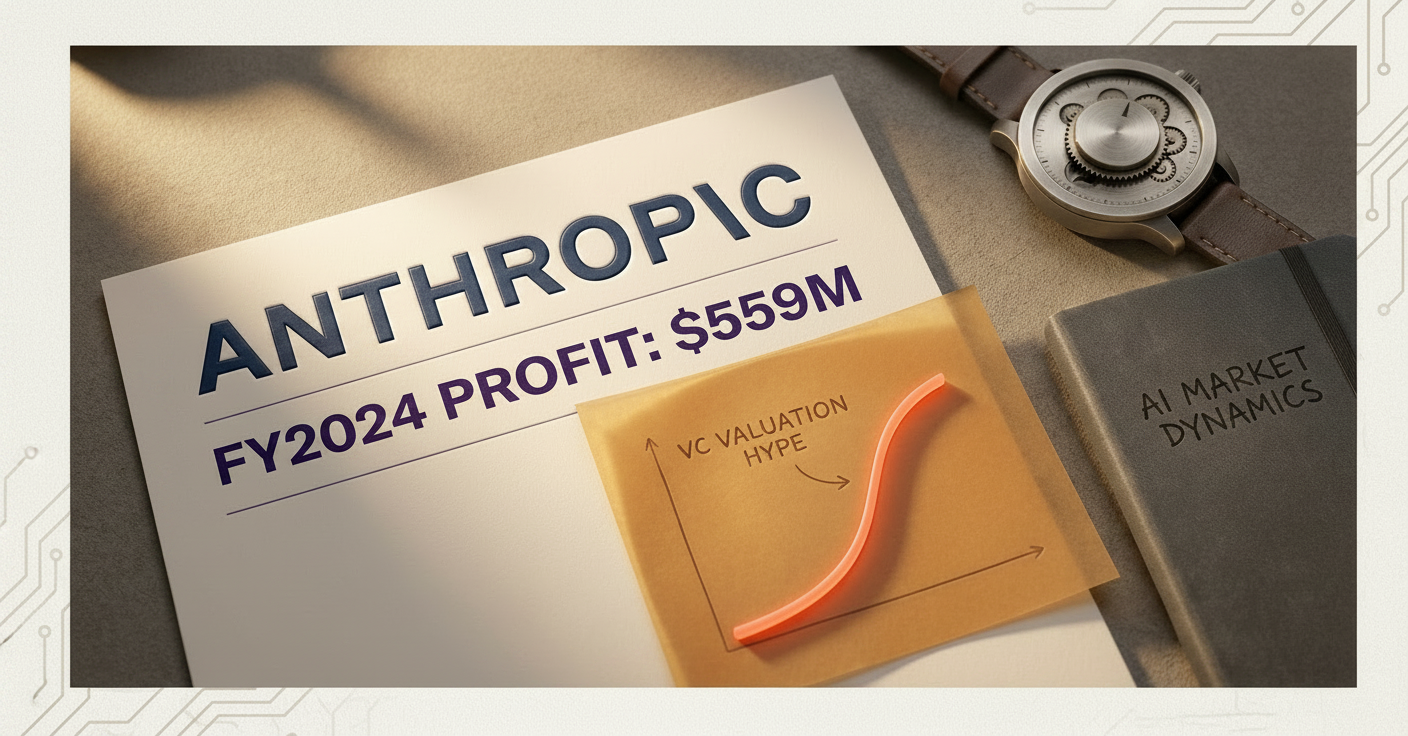
• Anthropic: Surpassed OpenAI in valuation and is projecting 559 million in Q2 operating profit, showcasing rapid profitability (Rory O’Driscoll on The Twenty Minute VC).
• SaaStr’s AI agent stack: Generating 2.25M sessions and $2M in revenue, demonstrating concrete ROI from operational AI deployments (Amelia Lerutte on The Official SaaStr Podcast).
• Mercor: Achieved a $10 billion post-money valuation at Series C with 50% MoM growth, indicating aggressive market capture (Brendan Foody on The Twenty Minute VC).
• Manna: The drone delivery company is already unit-margin positive and aggressively expanding, validating the commercial viability of drone logistics (Bobby Healy on This Week in Startups).
🆕 On Watch
• Cortical Labs: Fusing human brain cells with silicon chips, their CL1 biological computer shows 5,000x greater sample efficiency than GPUs (Dr. Hon Weng Chong on This Week in Startups).
• Happy Robot: Deploying AI agents in complex enterprise operations, focusing on forward-deployed engineering to unlock value in fragmented systems (Pablo Palafox on The a16z Show).
• US Drone Delivery Regulatory Environment: Recent changes in FAA and executive orders are making the USA a leader in drone readiness, opening the door for scaled operations (Bobby Healy on This Week in Startups).
📉 Cooling Off
• AI ROI for Developers: Uber and Microsoft expressed skepticism about AI’s productivity gains for developers, questioning the immediate return on significant AI investments (Rory O’Driscoll on The Twenty Minute VC).
• Foundational Model Pricing Power: Benedict Evans argued that foundational model companies might not maintain high margins due to commoditization and lack of network effects (Benedict Evans on Lenny's Podcast).
• Blue Origin’s Setback: A New Glenn rocket explosion on the launchpad, while inherent to risks in private space, hinders its ability to compete with SpaceX for satellite dominance (Scott Galloway on Pivot).
The Debate
Topic framing: There's a clear divergence in opinion about whether the current AI market is experiencing an overvaluation or is simply reflecting genuine, unprecedented growth.
🐂 The bull case:David George of a16z Podcast argued that we are "not in a bubble right now," citing massive supply constraints in AI infrastructure (compute, memory, data centers) as a protective factor. Demand far outstrips supply, indicating that current valuations reflect true market needs and an incredible pace of revenue generation by leading AI companies. He posits that this hypergrowth is sustainable because the underlying technology is still in early diffusion. "We've 10 XED over the space of kind of 24 months what a top 1% exit looks like."
🐻 The bear case: Conversely, Scott Galloway on Pivot declared that "one or more of these AI companies are overvalued and their stocks will likely drop 40-70%." He highlighted that 95% of CFOs are not seeing ROI on AI investments and warned that this could trigger a recession given the US economy's deep investment in AI. He cautions against valuing these companies on future promises rather than current, tangible returns.
Our read: While the growth is undeniable, the long-term sustainability of current valuations hinges on addressing the fundamental ROI question for enterprises and scaling infrastructure without creating future oversupply—a complex balancing act that suggests some market correction is inevitable for all but the most defensible players.
The Bottom Line
The venture market is bifurcating into hyper-consolidated AI giants with unprecedented growth, and everyone else grappling with the shifting economics of headcount versus token spend.
📖 Want the full episode breakdowns, guest details, and listen links?
Episode Guide (Web Version)
The Official SaaStr Podcast: SaaS | Founders | Investors — "SaaStr 857: The Agents #006 Inside SaaStr's 20+ AI Agent Stack: 2.25M Sessions, 614 Meetings, $2M in Revenue"
Runtime: 55 min | Host: SaaStr | Guest: Amelia Lerutte (Chief AI Officer, SaaStr)
For the SaaS CEO: This episode offers a granular look into how a leading SaaS company is deploying and scaling AI agents to drive significant revenue and operational efficiency right now.
Amelia Lerutte and Jason Lemkin detail SaaStr’s AI agent stack, highlighting the measurable impact of their AI VP of Marketing (10K) and AI VP of Customer Success (QB) on lead generation, meeting scheduling, and customer management.
"The more time you invest with the agents, just like most humans, the better they get."
— Jason Lemkin, Founder and CEO of SaaStr
Connects to: AI Agents deliver tangible ROI, despite "human-like" failures.
The a16z Show — "Building AI Agents for Enterprise Operations"
Runtime: 46 min | Host: Anish Acharya (Andreessen Horowitz) | Guest: Pablo Palafox (Co-founder, Happy Robot)
For the PE Operating Partner: Understand the real-world complexities and solutions for integrating AI agents into existing, fragmented enterprise systems.
Pablo Palafox and Luis Paarup from Happy Robot discuss deploying AI agents in complex enterprise operations, emphasizing voice AI as an "unlock" for logistics and the need for "forward deployed" engineering to clean data and ensure operational success.
"Success depends not just on model intelligence, but on coordination, context, and the ability to execute work reliably in the real world."
— Pablo Palafox, Co-founder of Happy Robot
Lenny's Podcast: Product | Career | Growth — "A rational conversation on where AI is actually going | Benedict Evans"
Runtime: 80 min | Host: Lenny (Lenny's Podcast) | Guest: Benedict Evans (Independent Analyst and former Partner, Andreessen Horowitz (former))
For the Stretched CEO: Gain a tempered, historical perspective on AI's trajectory from an expert analyst, moving beyond the daily hype cycle.
Benedict Evans, independent analyst, compares AI to the internet in 1997, highlighting its transformative potential while cautioning that much remains undeveloped. He challenges alarmist narratives, emphasizing that AI will augment, not solely replace, complex human jobs.
"My most controversial opinion is that I think that AI is as big a deal as the Internet or mobile and only as big a deal as the Internet or mobile."
— Benedict Evans, Independent Analyst and former Partner at Andreessen Horowitz
Connects to: Foundational Model Pricing Power is Cooling Off.
This Week in Startups — "How to Raise a Seed Round in 2026: Ask Jason | E2294"
Runtime: 58 min | Host: Jason Calacanis (This Week in Startups) | Guest: Lon Harris (This Week in Startups)
For the Founder Raising: Get an unvarnished view of the current seed-stage fundraising landscape and specific strategies to navigate it.
Jason Calacanis details the rigorous funnel for raising a seed round, requiring contact with 150 firms for two term sheets. He advises founders to differentiate from large AI labs and highlights the shifting investor sentiment towards hardware as a "moat."
"Each investor has a different area of speciality and you should look at what stage of a startup they invest in most and whatever they tell you is not as important as what they do."
— Jason Calacanis, Host of This Week in Startups
Connects to: Hardware is no longer a dirty word for investors.
Pivot — "Pope Leo’s AI Warning, UFC at the White House, and CBS Shakeups"
Runtime: 79 min | Host: Kara Swisher (New York Magazine) | Guest: Scott Galloway (Professor of Marketing, New York University Stern School of Business)
For the GP Making Allocation Decisions: Scott Galloway offers a contrarian view on AI valuations and regulation, providing a critical perspective on the broader market.
Kara Swisher and Scott Galloway discuss Pope Leo XIV's encyclical warning that AI could make humanity "less human." Scott provides a contrarian take on AI costs leading to more employment and challenges US AI regulation efforts versus China's proactive legislating.
"The Pope said it's not the morality of AI it's the morals of the people who make it. It teaches young people to never develop the key skills they have to really be successful in life and enjoy life."
— Scott Galloway, Professor of Marketing at New York University Stern School of Business
Connects to: The Debate: Is the AI Market in a Bubble?
The Twenty Minute VC (20VC): Venture Capital | Startup Funding | The Pitch — "20VC: OpenAI & SpaceX S1 Drops | NVIDIA's $81BN Revenue Quarter | Cloudlfare and ClickUp Do Controversial Layoffs | Exa, OpenRouter and Polsia Raise Mega Rounds | Uber and Microsoft Declare AI ROI for Developers is Questionable"
Runtime: 85 min | Host: Harry Stebbings (The Twenty Minute VC) | Guest: Rory O’Driscoll (Partner, Scale Venture Partners)
For the Growth Executive: Understand the financial dynamics of leading AI players and the market's evolving perception of AI ROI in product development.
Rory O’Driscoll and Jason Lamkin break down NVIDIA’s $81.6BN revenue quarter, Anthropic’s explosive gross margin expansion, and concerns from Uber and Microsoft regarding AI’s ROI for developers, showcasing a mixed bag of AI success and skepticism.
"It's not just a great revenue business growing at 80% it's a wildly profitable operating margin business."
— Rory O’Driscoll, Partner at Scale Venture Partners
Connects to: AI ROI for Developers is Cooling Off, The Big Shift.
The Twenty Minute VC (20VC): Venture Capital | Startup Funding | The Pitch — "20VC: Mercor CEO on Why Application Layer Companies Have No Defensibility, The Model is the Product | Token Spend Will Exceed Headcount Spend in 5 Years | The True Cost of Hiring AI Researchers in the Valley Today with Brendan Foody"
Runtime: 75 min | Host: Harry Stebbings (The Twenty Minute VC) | Guest: Brendan Foody (Co-Founder and Co-CEO, Mercor)
For the VC Partner: Dive deep into the evolving defensibility of AI application layers and the future of enterprise cost structures related to AI.
Brendan Foody, CEO of Mercor, argues that "the model is the product," making defensibility challenging for application-layer companies. He predicts enterprise token spend will surpass headcount spend in five years and discusses Mercor’s rapid growth to a $10 billion valuation.
"Building defensibility in the software layer on top of the models is going to be incredibly difficult. I think over the last two years everyone has increasingly realized that the model is the product."
— Brendan Foody, Co-Founder and Co-CEO of Mercor
Connects to: Application layer defensibility remains a significant challenge, AI workforce costs are shifting from headcount to token spend.
This Week in Startups — "The Drone Company Quietly Taking Over Delivery"
Runtime: 61 min | Host: Jason Calacanis (This Week in Startups) | Guest: Bobby Healy (Founder, Manna)
For the LP Allocating Capital: Understand how a drone company achieved profitability and scale, providing a case study in capital-efficient hardware ventures.
Bobby Healy, founder of Manna, explains how his drone delivery company achieved margin-positive operations in Europe and plans aggressive US expansion, leveraging favorable regulatory changes and low-cost airline economics to compete with traditional delivery services.
"The difference with us is we're margin positive already. We already make money on nearly every delivery we do. And our locations that we open up are profitable already."
— Bobby Healy, Founder of Manna
The a16z Show — "Why $1B Exits are Dead"
Runtime: 34 min | Host: Erik Torenberg (The a16z Show) | Guest: David George (General Partner, a16z)
For the GP Making Investment Decisions: This episode is essential for understanding the redefined scale of top-tier VC exits and the current market dynamics favoring hypergrowth in AI.
David George and David Clark discuss the hyper-acceleration of AI company growth, with Anthropic and OpenAI showing revenue growth comparable to hyperscalers despite low market diffusion. They highlight how AI is dramatically increasing top-tier exit sizes, rethinking VC strategies.
"We've 10 XED over the space of kind of 24 months what a top 1% exit looks like. So between 2020 and 2024, top 1% exit went from $10 billion to $32 billion."
— David Clark, CIO at VenCap
Connects to: The Big Shift, The Debate: Is the AI Market in a Bubble?
Pivot — "Anthropic's IPO, Platner's Campaign Controversies, and Blue Origin's Setback"
Runtime: 59 min | Host: Kara Swisher (New York Magazine) | Guest: Scott Galloway (Professor of Marketing, New York University Stern School of Business)
For the Stretched CEO: Gain insights into market sentiment on AI valuations and the broader tech landscape from two seasoned analysts.
Kara Swisher and Scott Galloway analyze Anthropic's rapid valuation growth surpassing OpenAI, yet Scott warns of potential overvaluation for AI companies. They also touch on political controversies and Blue Origin's rocket setback, contrasting risk-taking in private space endeavors.
"I actually think that Anthropic, or In the next 12 months from this one of our predictions, is going to be worth more than OpenAI. Very well done."
— Scott, Host at Pivot
Connects to: The Debate: Is the AI Market in a Bubble?
This Week in Startups — "This Startup Fused Human Brain Cells with Silicon Chips | E2295"
Runtime: 66 min | Host: Jason (This Week in Startups) | Guest: Dr. Hon Weng Chong (Founder, Cortical Labs)
For the PE Operating Partner: Explore disruptive deep tech that challenges current computing paradigms and could unlock new efficiencies across industries.
Dr. Hon Weng Chong, founder of Cortical Labs, discusses their CL1 biological computers, which fuse human neurons with silicon chips. These systems demonstrate 5,000 times greater sample efficiency than GPUs in reinforcement learning, outlining ethical considerations and broad accessibility for researchers.
"The neurons we had were 5,000 times more sample efficient than their GPU based systems."
— Dr. Hon Weng Chong, Founder of Cortical Labs
Connects to: Biological computing offers 5000x efficiency gain in reinforcement learning.