
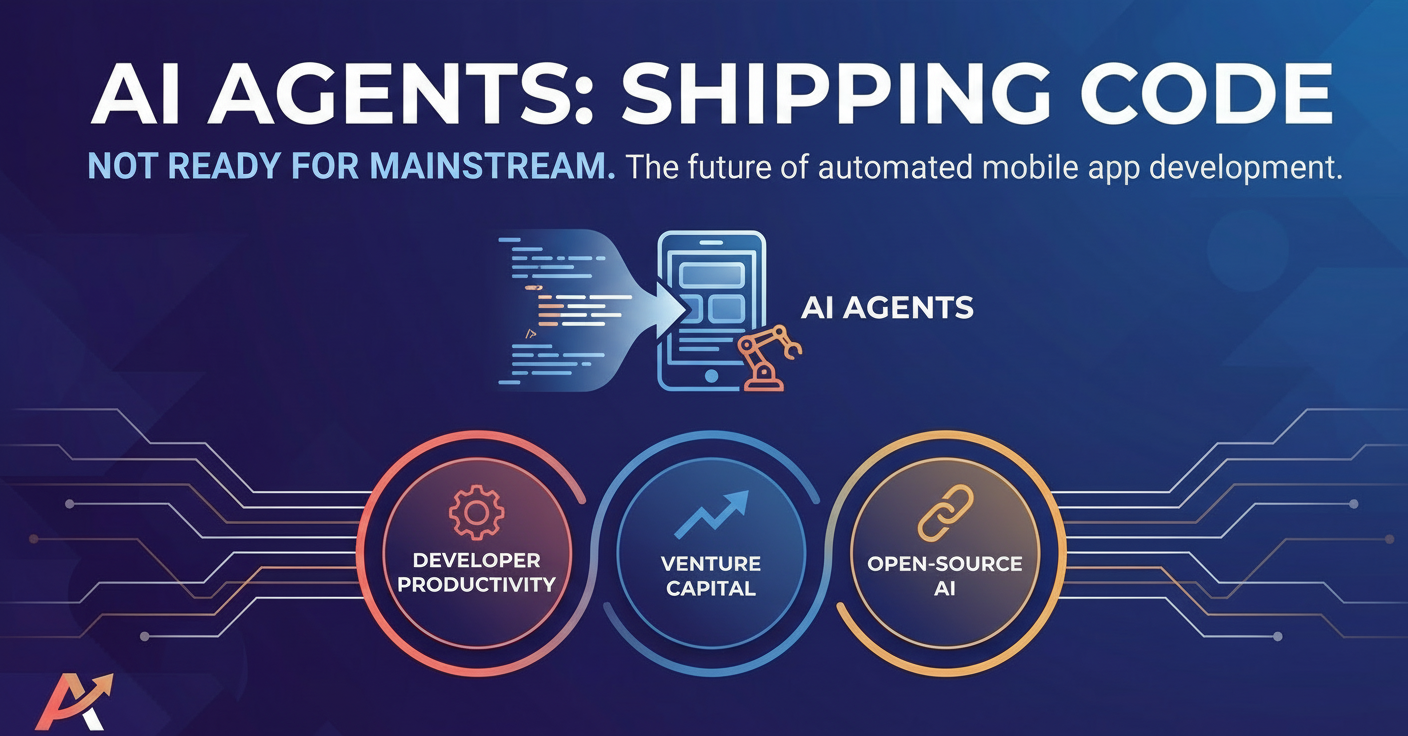
AI isn't automating jobs, it's multiplying engineers; it’s building 100% of internal code at OpenAI, and it's making 'dumb apps' rich again for those who know how to use it.
The Intake
📊 11 episodes across 8 podcasts
⏱ 694 minutes of intelligence analyzed
🎙 Featuring: Harry Stebbings, Alex Embiricos, Jason Calacanis, Oliver Henry
The Big Shift
AI's New Frontier: Automating the Developers, Not Just the Code
The conversation around AI and coding has fundamentally shifted from job displacement to radical augmentation, with implications for engineering roles, software development, and even venture investment. Contrary to initial fears of AI automating away developer jobs, the cutting edge of AI, specifically coding agents like Codex and Claude Code, is demonstrating a future where AI greatly expands the number of engineers by enabling higher-level abstraction and significantly increasing individual productivity. This was a core theme across discussions from OpenAI to Anthropic, highlighting that the real bottleneck to AGI might not be compute or model architecture, but human "typing speed and validation work" (Alex Embiricos on
The Twenty Minute VC). This approach radically flips the script: instead of reducing headcount, AI creates leverage, making each engineer a "superhuman" capable of 10x output.
"100% of my code is written by QuadCode. I have not edited a single line by hand since November. Every day I ship 10, 20, 30 pull requests."
— Boris Cherny, Head of Claude Code at Anthropic on Lenny's Podcast: Product | Career | Growth
This unprecedented productivity isn't just theoretical; Boris Cherny, Head of Claude Code at Anthropic, revealed that 100% of his code is now AI-written, shipping 10-30 pull requests daily, while OpenAI internally writes and reviews the majority of its own code with AI. This new reality suggests a future where the role of a traditional "software engineer" may dissolve, replaced by "builders" focused on conceptualization and problem-solving, not syntax. For investors, this implies a focus on platforms and tools that amplify these "builders," and a re-evaluation of what constitutes a defensible "technical team" when the code itself is commoditized at an accelerating rate. The new battleground is less about who writes the best code, and more about who can architect the most effective AI-driven "builder" workflows.
The Rundown
① Mega-Funds Double Down on "Platform" AI Companies. Large growth funds are actively concentrating investments in foundational AI companies rather than diversifying into numerous smaller SaaS ventures. This strategy, as discussed by Lucas Swisher (The Twenty Minute VC), is driven by the belief that exceptional returns come from companies that stay private longer and dominate mega-markets such as AI. For investors, "price matters least" on the path to a 10x return when investing in these exponential growth opportunities.
→ Why it matters: This signals a flight to quality and scale in venture, with large funds chasing the few companies with potential for outsized, multi-billion dollar outcomes. Vertical SaaS is out, foundational AI is in for mega-funds.
② "Dumb" iPhone Apps Are Making Comeback with AI Development. The iPhone app economy is seeing an unexpected resurgence, with founders finding success in niche areas like health, wealth, and productivity through what are colloquially termed "dumb apps." This phenomenon is fueled by advancements in AI coding tools that simplify development and new marketing channels like TikTok for validation and discovery (Pat Walls on My First Million).
→ The signal: This points to a democratization of app development and marketing, lowering the barrier to entry for entrepreneurs to build and scale profitable mobile businesses without massive funding or technical teams. It suggests a new wave of "lean startups" in the consumer app space leveraging AI for speed and virality for growth.
③ Open-Source Agents Face Significant Mainstream Adoption Hurdles. While powerful for "tinkerers," open-source agent technologies like OpenClaw are not yet ready for mainstream consumer adoption due to technical complexity and security concerns (Matthew Berman on This Week in Startups). Jason Calacanis also noted that these agents increase the "attack surface area" for personal data. This presents both a challenge and an opportunity for larger players like Google, who are better positioned for mass-market integration.
→ Why it matters: The immediate future of agentic AI for the masses may hinge on established tech giants integrating these capabilities into user-friendly interfaces, rather than relying on sophisticated open-source tools. Founders building agentic solutions need to focus on seamless user experience or target prosumer/enterprise users.
④ The "Ultron" CEO: Centralized AI to Manage Corporate Knowledge and Operations. The vision of an "Ultron"-like AI CEO capable of autonomously managing internal company data from across all communication platforms (e.g., Notion, Slack, Google Docs) is emerging (Jason Calacanis on This Week in Startups). This AI could summarize emails, identify blockers, and increase transparency, fundamentally shifting corporate leadership and operational efficiency.
→ What to watch: This trend suggests a move towards AI-driven knowledge management solutions that promise to reduce corporate "knowledge chaos" and operational overhead. Companies that can develop secure, integrated AI platforms for this purpose will become critical infrastructure for the future enterprise.
⑤ Cap Table Design & Investor Selection: Generosity, Dilution, and Relationship-Driven Checks. Yuri Sagalov (General Catalyst on Equity) emphasized that startup founders should be generous with equity for their first 2-3 hires (2% instead of 0.5%), as their impact on culture is disproportionate. He also highlighted that investor value is often "completely decoupled" from check size, advocating for careful investor selection and avoiding those who micromanage or offer equity to advisors without significant, active contributions. Sagalov typically recommends "no more than like 20 to 25% dilution by the seed round."
→ The signal: The shift promotes founder-friendly terms and employee retention, emphasizing the long-term impact of early hires and the quality of investor relationships over pure capital. This prioritizes strategic, hands-on angels or smaller funds who provide true value beyond just money, with a clear focus on cap-table hygiene.
Signal Board
🔥 HEATING UP
• AI Generosity Programs: Early-stage AI companies are being advised to give engineers "unlimited tokens" initially to boost creativity and innovation before optimizing costs. (Boris Cherny on Lenny's Podcast: Product | Career | Growth)
• AI-as-a-Service Monetization: The ability of AI agents to close six-figure deals over weekends, due to their efficiency and "lack of shame," suggests a powerful, scalable sales channel. (Jason Lemkin on The Official SaaStr Podcast: SaaS | Founders | Investors)
• Agent Interoperability (Agents.md): OpenAI is championing "Agents.md" as an open standard for agent-to-agent communication, aiming for vendor neutrality and wider ecosystem adoption. (Alex Embiricos on The Twenty Minute VC)
👀 ON WATCH
• SaaS Stock Valuations: Public SaaS companies are facing a re-evaluation as their "annuity streams" are questioned by the disruptive potential of AI, causing "massively crashed" stock prices. (Lucas Swisher on The Twenty Minute VC, Jason Lemkin on The Official SaaStr Podcast: SaaS | Founders | Investors)
• Spatial AI / 3D Scene Rendering: Technologies like Gaussian splats for 3D scene rendering are emerging, indicating new frontiers in AI applications beyond traditional text or image generation. (Swyx on The a16z Show)
• B2B Video Content Opportunity: Growing demand for B2B video content with a lack of established internal functions presents a significant market opportunity for specialized content creators. (Shaan Puri on My First Million)
🧊 COOLING OFF
• Proprietary AI Models: Anthropic has reportedly updated policies to prevent external use of their Pro/Max plans, effectively banning personal Claude subscriptions with external OpenClaw instances, indicating a move towards more closed ecosystems. (Matthew Berman on This Week in Startups)
• "Unfundable" Great Businesses: Businesses with strong core models but moderate growth rates, while potentially good investments, are deemed "unfundable" amidst the market's demand for "insane levels of growth" driven by AI. (Jason Lemkin on The Official SaaStr Podcast: SaaS | Founders | Investors)
• Consumer Hardware Venture Capital: Investors are highly skeptical of consumer hardware pitches, especially for early-stage companies with clunky prototypes, citing intense competition from tech giants. (Dawn Dobras, Jesse Middleton on The Pitch)
The Debate
The Battle for AI Dominance: Ecosystem Lock-in vs. Open Standards.
🐂 The Bull Case for Ecosystem Lock-in: Some AI players are already taking steps to restrict the use of their advanced models outside their proprietary systems, anticipating a future where dominant AI platforms will leverage their models for competitive advantage. This strategy ensures control over the user experience, data, and monetization, aiming to capture the most value. Matthew Berman (YouTuber and OpenClaw enthusiast) noted on This Week in Startups that "Anthropic policy changes" are impacting OpenClaw, suggesting a move away from open interaction with their models.
🐻 The Bear Case for Open Standards: Countering the trend toward proprietary ecosystems, OpenAI is actively promoting open standards like "Agents.md" to ensure interoperability between different AI agents and systems. Alex Embiricos (Head of Codex at OpenAI) argued on The Twenty Minute VC that OpenAI's mission involves the "distribution of intelligence" and that they "serve these models to our competitors," believing that competition fosters improvement and aligns with their broader AGI goals through user adoption over strict revenue. This suggests a long-term play on widespread utility driving a dominant position, even if it means serving open models.
Our Read: While both strategies have merit, OpenAI's emphasis on open standards for agent interoperability, even at the cost of immediate revenue extraction by serving its models to competitors, positions it to win the developer and user ecosystem at scale, echoing historical platform plays from AWS to Android.
The Bottom Line
AI's accelerating impact is forcing a rethink across playbooks—from capital allocation to developer productivity to product strategy—rewarding those who embrace radical augmentation and penalizing those attempting to cling to "old school SaaS" models.
Your Move
① Audit your tech talent strategy: Evaluate your engineering teams for optimal AI integration, identifying "builders" who can leverage AI coding agents for 10x productivity rather than traditional coders. Ask: are we attracting and retaining talent that can operate at a higher level of abstraction with AI assistance?
② Re-evaluate your cap table and hiring approach: For early-stage companies, revisit your equity compensation strategy, especially for initial hires, ensuring generosity to attract and retain disproportionately impactful talent, and critically assess each investor’s value beyond just their check size.
③ Explore monetizing niche mobile apps with AI assistance: Investigate opportunities in "dumb" iPhone apps within health, wealth, and productivity, leveraging AI coding tools for rapid development and TikTok for viral market validation and discovery.
④ Assess AI agent integration for corporate efficiency: Look for solutions that centralize and process internal corporate communications and knowledge, aiming for an "Ultron"-like AI CEO to streamline operations, identify blockers, and reduce "knowledge chaos."
⑤ Stress-test your SaaS business model against AI disruption: For public or private SaaS companies, determine if your growth is accelerating with AI or if your "annuity streams" are at risk. Focus on how AI agents could bypass or disrupt your core offering, and adapt your strategy accordingly.
📖 Want the full episode breakdowns, guest details, and listen links?
Quick appendix
The Twenty Minute VC (20VC): Venture Capital | Startup Funding | The Pitch: "20VC: Codex vs Claude Code vs Cursor: Who Wins, Who Loses | Will All Coding Be Automated - Do We Need PMs | The Real Bottleneck to AGI | The Three Phases of Agents and What You Need to Know with Alex Embiricos, Head of Codex at OpenAI" · 68 min · Featuring Harry Stebbings, Alex Embiricos ▶ Listen
The Twenty Minute VC (20VC): Venture Capital | Startup Funding | The Pitch: "20VC: Inside Coatue's $7BN Growth Fund: Why Price Matters Least | Why Mega Markets are the Most Important | How Mega Funds Can Still Do 5x Returns | How to Assess Durability of Revenue and Margins in AI with Lucas Swisher" · 67 min · Featuring Lucas Swisher, Harry Stebbings ▶ Listen
The Twenty Minute VC (20VC): Venture Capital | Startup Funding | The Pitch: "20VC: Anthropic Raises $30BN at $380BN Valuation | Thrive Raises New $10BN Fund | OpenAI Buys OpenClaw | Stripe Raises at $140BN: Is Adyen Wildly Undervalued? | Monday, Figma, Shopify: Which are Buys vs Sells?" · 94 min · Featuring Harry Stebbings, Rory O'Driscoll, Jason Lemkin, Jason ▶ Listen
This Week in Startups: "Kill Your Startup’s Knowledge Chaos with OpenClaw (with Oliver Henry and Jeff Weisbein) | E2254" · 79 min · Featuring Jason Calacanis, Oliver Henry, Jeff Weisbein, Jason, Alex ▶ Listen
This Week in Startups: "When Will Openclaw go Mainstream? | E2252" · 62 min · Featuring Matthew Berman, Ryan Yaneli, Jason Grad, Jason Calacanis, Matt, Ryan ▶ Listen
The a16z Show: "Capital, Compute, and the Fight for AI Dominance" · 58 min · Featuring Martin Casado, Sarah Wang, Alessio Fanelli, Swyx ▶ Listen
The Pitch: "#179 Minimis: Declaring War on Garmin" · 42 min · Featuring Joe, Paul, Josh Muccio, Charles Hudson, Elizabeth Yin, Jesse Middleton, Dawn Dobras ▶ Listen
Equity: "Build Mode: Compensation, culture, and cap tables with Yuri Sagalov, GeneralCatalyst" · 43 min · Featuring Yuri Sagalov, Isabelle Johannessen ▶ Listen
The Official SaaStr Podcast: SaaS | Founders | Investors: "SaaStr 843: Software Stocks Have Massively Crashed. Here's What Founders Need to Know." · 44 min · Featuring Jason Lemkin, null ▶ Listen
My First Million: "Dumb iPhone Apps Are Making People Rich Again (Here’s how)" · 49 min · Featuring Pat Walls, Sam Parr, Shaan Puri ▶ Listen
Lenny's Podcast: Product | Career | Growth: "Head of Claude Code: What happens after coding is solved | Boris Cherny" · 88 min · Featuring Boris Cherny, Lenny ▶ Listen