
The Strait of Hormuz is becoming the global economic choke point, forcing central banks to rethink rate cuts and CEOs to re-evaluate supply chain and energy costs for the long haul.
📊 12 episodes across 8 podcasts
⏱ 662 minutes of intelligence analyzed
🎙 Featuring: Tom Keene (Bloomberg), Jonathan Ferro (Bloomberg), Jay Powell (Federal Reserve), Torsten Bell (Apollo), Simon White (Macro Strategist, Bloomberg), Jim Lebenthal (Chief Market Strategist and Partner, Serity Partners), Rory Johnston (Founder, Commodity Context), François Rochon (Founder and Portfolio Manager, Giverny Capital), Mike Wilson (Chief U.S. Equity Strategist and Chief Investment Officer, Morgan Stanley), Gary Gensler (Former SEC Chair & Professor at MIT Sloan School of Management)
The Big Shift
Oil markets are now bifurcated, reflecting a new geopolitical reality that could lock in higher inflation and shift currency dynamics.
The consensus is clear: the Middle East conflict is no longer a temporary blip but a structural shift affecting global markets, with oil prices being the most immediate and visceral indicator. This isn't just about supply; it's about a fundamental re-evaluation of geopolitical risk, especially concerning the Strait of Hormuz. The market is now pricing in a sustained, long-term impact on energy costs and, by extension, inflation. Stephen Schork, President of Schork Group Inc., highlighted this evolving dynamic, noting:
"The Brent market is now the benchmark for the seaborne trade in oil. And this is the market that is pricing. The conflict is pricing, the war is pricing the shortages that we are seeing. The wti, the CTI market, prices, optionality prices, optimism."
— Stephen Schork, President, Editor, Founder of Schork Group Inc.
This bifurcation between Brent and WTI crude reflects a deeper issue: the market believes the US may no longer police the Strait of Hormuz, effectively shifting this responsibility, and its financial burden, to other nations. Simon White, Macro Strategist at Bloomberg, and Rory Johnston, Founder of Commodity Context, extensively discussed how this ongoing conflict, with Lt. General Robert Walsh characterizing it as a "war of attrition," is forcing central banks to maintain hawkish stances. The implication for CFOs? Long-term capital expenditure models and refinancing timelines must account for persistently higher energy prices and interest rates, as central banks prioritize inflation control over growth, mindful of a potential "Act 3" of secular inflation (Simon White on Macro Voices).
→ The Level to Watch: The spread between Brent and WTI crude. A widening spread signals escalating geopolitical distress and a structural divergence in global oil pricing, impacting everything from transport costs to energy-intensive manufacturing. This is not a short-term volatility play; it’s a long-term cost of doing business.
The Rundown
① The Fed's hawkish bias is cemented by energy shocks. While Federal Reserve Chair Jay Powell still anticipates one rate cut this year, the escalating conflict in the Middle East and rising oil prices have introduced significant uncertainty, making inflation reduction paramount (Jay Powell on Bloomberg Surveillance). The Fed's updated Summary of Economic Projections (SEP) paradoxically showed higher GDP forecasts alongside higher inflation, suggesting a willingness to tolerate traditional stagflationary elements for growth.
→ Why it matters: Refinancing and capital allocation decisions need to factor in a higher-for-longer rate environment, as the Fed prioritizes combating inflation expectations even at the expense of typical economic models. Don't expect a quick dovish pivot.
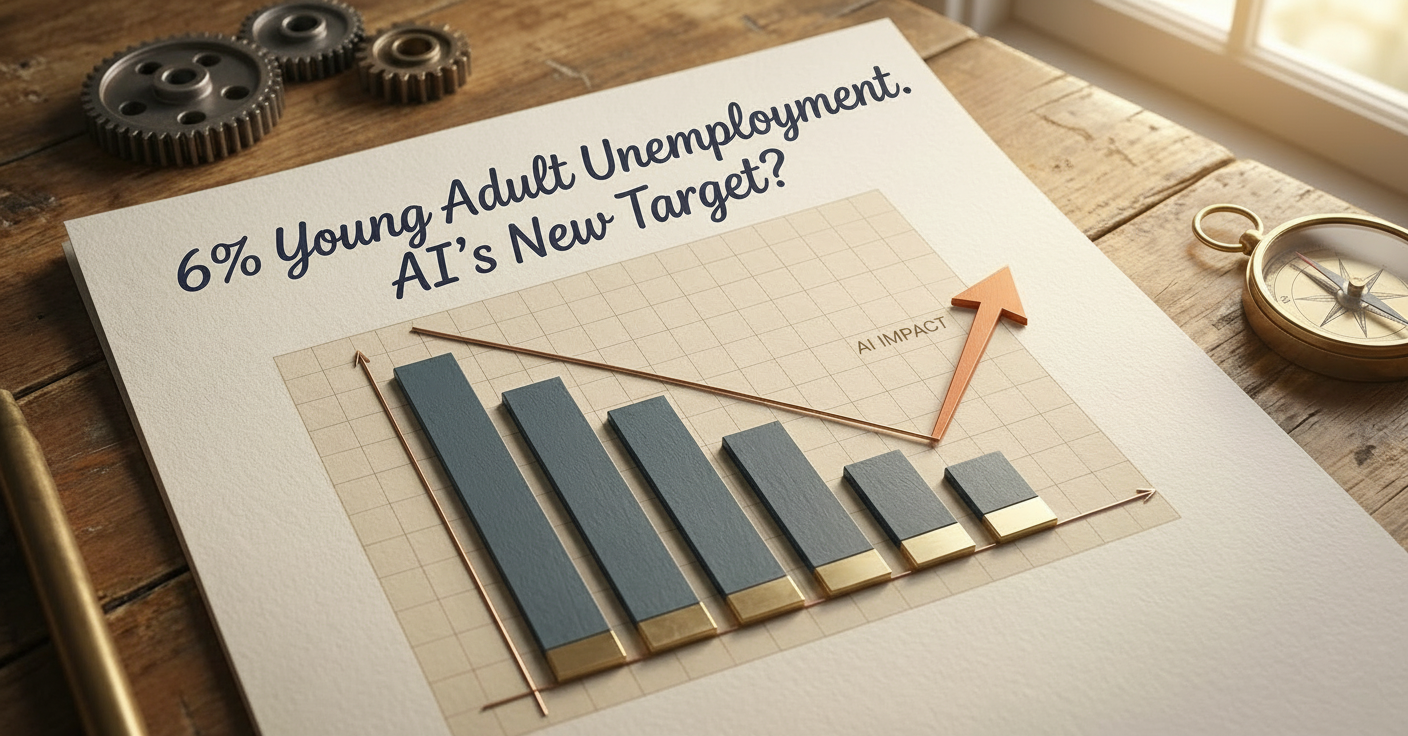
② AI's impact on employment is hitting recent college grads first. The unemployment rate for 22-27 year olds (6%) is now significantly higher than the overall rate (4%)—a trend unseen before and growing for three straight years (Michael Batnick on The Compound and Friends). This data suggests AI is displacing entry-level jobs rather than leading to mass layoffs across the board, creating a bottleneck for new talent entering the workforce.
→ Why it matters: Businesses must adapt recruitment and training strategies, focusing on upskilling existing talent and rethinking the entry points for new graduates, as AI continues to reshape the talent landscape at the bottom of the funnel.
③ Private credit risk is migrating to retail investors via wealth channels. Former SEC Chair Gary Gensler warns that the primary risk in private credit isn't its overall size but the increasing involvement of retail investors, often through less transparent structures (Gary Gensler on Bloomberg Surveillance). This trend could expose a less sophisticated investor base to illiquid assets that feature gates and less robust reporting.
→ Why it matters: Financial advisors and wealth managers need to thoroughly vet private credit offerings and understand the liquidity risks before recommending them, particularly for clients susceptible to illiquidity and opaque valuation methodologies.
④ New power laws in value investing favor measured scaling over immediate conviction. Value investor Kyle Grieve makes the case for applying venture capital principles to public markets, specifically "averaging up" positions as businesses mature and de-risk (Kyle Grieve on We Study Billionaires - The Investor’s Podcast Network). He argues that a small number of "power law" winners drive the majority of portfolio returns, and prematurely selling these can be far more damaging than initial missteps.
→ Why it matters: Portfolio managers should resist anchoring to initial low prices and evaluate scaling positions in proven winners (e.g., Micron) that de-risk over time, embracing a more dynamic, venture-like approach to public market allocation.
⑤ Inflationary regime resembling the 1940s implies shorter, hotter cycles.Mike Wilson of Morgan Stanley suggests we're entering a 30-year inflationary regime with economic cycles that are faster and more volatile than previously experienced (Mike Wilson on The Meb Faber Show - Better Investing). This environment necessitates a defensive portfolio allocation, including assets like gold, to hedge against persistent inflation and geopolitical instability.
→ Why it matters: Strategic planning should incorporate scenario analysis for rapid shifts in economic conditions and capital costs, emphasizing resilient business models and financial structures that can withstand prolonged periods of unpredictability and higher capital costs.
Signal Board
🔥 Heating Up
• Iran Conflict: Driving sustained global oil price increases, tightening central bank policy, and indicating a structural, long-term shift in energy geopolitics. (Simon White on Macro Voices)
• Uranium Demand Cycle: Fundamentals are strongly bullish due to increasing global demand for nuclear energy and geopolitical supply chain realignments. (Erik Townsend on Macro Voices)
• Gold as a Tail Hedge: Proving its utility as a hedge against both inflationary debasement and deflationary credit events in an uncertain world. (Simon White on Macro Voices)
• AI-Driven Operating Leverage: AI's primary impact on the labor market isn't mass layoffs but reducing new hiring needs, leading to improved operating leverage for companies. (Mike Wilson on The Meb Faber Show - Better Investing)
🆕 On Watch
• 🆕 Private Credit Market Risks and Opportunities: Retail investor involvement through wealth channels introduces new risks due to transparency and liquidity concerns. (Gary Gensler on Bloomberg Surveillance)
• 🆕 Impact of AI on job displacement for recent college graduates: The unemployment rate for 22-27 year olds is disproportionately high, suggesting AI is impacting entry-level roles first. (Michael Batnick on The Compound and Friends)
• 🆕 Strait of Hormuz closure impact on global economy: The market is signaling a belief that the US may not police the Strait, shifting responsibility and costs for oil security. (Stephen Schork on Bloomberg Surveillance)
• 🆕 Market Volatility and Bear Market Conditions: Despite S&P 500 highs, 40% of individual stocks are in a bear market, indicating internal divergence and sector-specific pain. (Michael Batnick on The Compound and Friends)
🧊 Cooling Off
• Soft Landing Consensus: The Federal Reserve's revised GDP and inflation forecasts, coupled with ongoing geopolitical shocks, indicate a departure from a smooth economic transition. (Tom Keene on Bloomberg Surveillance)
• Market Capitulation: While individual stocks are struggling, broad market sentiment indicates investors are less prone to panic-selling, preventing a full market flush. (Michael Batnick on The Compound and Friends)
• Long-Term Growth Rates: Geopolitical conflicts and sustained inflation pressure are weighing on the long-term growth outlook, impacting equity market multiples. (Gary Gensler on Bloomberg Surveillance)
• Traditional Flight to Safety (Treasuries): Geopolitical turmoil is not causing bond yields to drop as expected, as inflation concerns from oil prices override typical safe-haven flows. (Robert Brokamp on Motley Fool Money)
The Debate
Is the market's "soft landing" narrative sustainable amidst mounting internal divergence and external shocks?
🐂 The bull case: Despite the S&P 500 nearing all-time highs, many high-quality companies are trading at attractive "bear market" valuations (François Rochon on We Study Billionaires - The Investor’s Podcast Network). Jim Lebenthal argues that while "this year actually is volatile... I still think this is gonna be a very good year," suggesting that market participants are becoming more resilient to a continuous stream of global and economic concerns (Jim Lebenthal on The Compound and Friends).
🐻 The bear case: The market is highly bifurcated, with 40% of S&P 500 stocks already in a bear market, implying the broader indices mask significant underlying weakness (Michael Batnick on The Compound and Friends). Simon White believes that "inflation is probably the most mispriced thing at the moment" and that the "soft landing" consensus is vulnerable to the sustained impact of the Iran conflict and potential "Act 3" of secular inflation (Simon White on Macro Voices).
→ Our read: The market is exhibiting cognitive dissonance, with headline indices masking significant internal decay. The external geopolitical shocks are likely to widen this divergence, pushing more individual names into bear territory even if major indices remain elevated for now.
The Bottom Line
The global economy is entering an era of persistent geopolitical risk and higher-for-longer inflation, making operational resilience and dynamic capital allocation paramount for navigating the next phase of market uncertainty.
📖 Want the full episode breakdowns, guest details, and listen links?
Episode Guide
1. Motley Fool Money — "The Reality of Investing in 2026"
Runtime: 42 min | Host: Travis Hoium | Guest: Lou Whiteman (Motley Fool Money), Jon Quast (Motley Fool Money), John (Analyst, Motley Fool Money), Lou (Analyst, Motley Fool Money), Dan (Analyst, Motley Fool Money)
For the Strategic Investor: This episode offers crucial insights into long-term investing strategies and risk management during periods of sustained geopolitical and economic uncertainty, drawing parallels to historical crises.
This discussion explores the lasting economic impact of the Iran conflict on oil prices and supply chains, market sentiment amid fear, and the resilience of tech giants and emerging companies for long-term investing.
"Most important advice here is don't make long term decisions based on near term pain. Fleeing the markets when things are bad can be really, really harmful to your long term goals."
— Lou Whiteman, Motley Fool Money
2. Bloomberg Surveillance — "Instant Reaction: Jay Powell on the Fed Decision"
Runtime: 26 min | Host: Tom Keene | Guest: Jonathan Ferro (Host, Bloomberg), Jay Powell (Chair, Federal Reserve), Torsten Bell (Guest, Apollo), Mike McKay (Reporter, Bloomberg), Jeff Rosenberg (Guest, BlackRock)
For the Capital Allocator: Essential for understanding the Federal Reserve's current stance on interest rates, its underlying assumptions concerning inflation and GDP, and the direct implications for capital markets.
This episode breaks down Jay Powell's remarks on the Fed's decision to hold rates, acknowledging geopolitical uncertainty, and the implications of rising oil prices on economic forecasts and future rate cuts.
"The textbook would certainly tell you that an oil price shock is stagflation. You get higher prices and lower GDP. And there was no evidence of that in the SEP today."
— Tom Keene, Host of Bloomberg Surveillance
3. Bloomberg Surveillance — "Oil and Gas Prices Jump as Strikes on Gulf Facilities Escalate"
Runtime: 44 min | Host: Tom Keene | Guest: Gary Gensler (Former SEC Chair & Professor of the Practice of Global Economics and Management as well as of Finance, MIT Sloan School of Management), Ian Lyngen (Head of US Rates Strategy, BMO Capital Markets), Paul Sweeney (Host, Bloomberg), Anna Wong (Chief US Economist, Bloomberg Economics), Daniel Morris (Chief Market Strategist, BNP Paribas Asset Management)
For the Risk Manager: This episode details the structural risks within private credit, the Federal Reserve's 'jawboning' strategies, and the geopolitical impacts on energy markets, all critical for managing financial exposure.
This segment discusses the escalating oil and gas prices due to Gulf facility strikes, the Fed's hesitation to cut rates, the unique risks of private credit to retail investors, and AI's disruptive potential.
"I think it also is going to hollow out some of our Longer term growth look, we've remarkably resilient economy. Jason Furman just wrote about this in the New York Times. But I do think that our longer term growth rate is now clinked down a little bit more and so I'd be worried about multiples in the equity markets when you have lower growth."
— Gary Gensler, Former SEC Chair & Professor at MIT Sloan School of Management
4. Motley Fool Money — "The Best Places to Retire, and Play It Safer Before Retirement"
Runtime: 23 min | Host: Robert Brokamp | Guest: Matt Frankel (Certified Financial Planner and Real Estate Expert, The Motley Fool)
For the Financial Planner: Offers practical advice on retirement planning amidst market volatility and inflation, with insights into geographical considerations and portfolio risk management.
Robert Brokamp and Matt Frankel discuss retirement planning, focusing on factors for ideal retirement locations, market volatility's impact on pre-retirement returns, and the rising 10-year Treasury yield due to inflation concerns.
"Returns immediately before retirement have the greatest impact on retirement spending."
— Robert Brokamp, Host at The Motley Fool
5. We Study Billionaires - The Investor’s Podcast Network — "TIP800: Navigating an AI-Driven Market w/ François Rochon"
Runtime: 75 min | Host: Clay | Guest: François Rochon (Founder and Portfolio Manager, Giverny Capital)
For the Value Investor: Provides a seasoned investor's perspective on identifying undervalued companies like Constellation Software in an AI-driven market, focusing on long-term resilience and the circular investment dynamics of AI infrastructure.
Clay and François Rochon discuss navigating an AI-driven market, long-term investing principles, and the surprising resilience of niche software companies against AI disruption.
"AI is a revolution in some ways probably as important as the Internet 30 years ago. It is a fast growing industries but it's very hard to predict where it will be in five and 10 years."
— François Rochon, Founder and Portfolio Manager at Giverny Capital
6. The Meb Faber Show - Better Investing — "The Geopolitical Shock Playbook (Mike Wilson, Morgan Stanley) | #623"
Runtime: 48 min | Host: Meb Faber | Guest: Mike Wilson (Chief U.S. Equity Strategist and Chief Investment Officer, Morgan Stanley), Meb (Host, The Meb Faber Show)
For the Portfolio Manager: Offers a strategic geopolitical playbook, advocating for flexible portfolio allocation (including gold) and anticipating a shift from mega-cap dominance to broader market leadership in an inflationary regime.
Mike Wilson of Morgan Stanley discusses navigating geopolitical shocks, shifting market leadership, and the long-term implications of an inflationary regime resembling the 1940s.
"We're now into an inflationary regime that will probably last 30 years."
— Mike Wilson, Chief U.S. Equity Strategist and Chief Investment Officer at Morgan Stanley
7. The Intrinsic Value Podcast - The Investor’s Podcast Network — "TIVP064: Kelly Partners Group: The Constellation Software of Accounting? w/ Daniel Mahncke & Shawn O’Malley"
Runtime: 77 min | Host: Shawn O’Malley | Guest: Daniel Mahncke (Host, The Investor's Podcast Network), The Investor's Podcast Network (Host, The Investor's Podcast Network)
For the Private Equity / M&A Professional: An in-depth look at a serial acquirer in the accounting sector, offering a case study on programmatic M&A, valuation challenges, and the potential for AI to create new acquisition opportunities.
This episode analyzes Kelly Partners Group's acquisition model in the accounting sector, its strategic growth, attractive valuation, and resilience against AI disruption.
"Kelly Partners is a company that's early in its journey and for the first time in years, attractively valued."
— Daniel Mahncke
8. The Compound and Friends — "Are We in a Bear Market?"
Runtime: 87 min | Host: Michael Batnick | Guest: Jim Lebenthal (Chief Market Strategist and Partner, Serity Partners), Downtown Josh Brown (Co-host, Ritholtz Wealth Management), Jim Leventhal (Author, Lebenthal Holdings)
For the C-Suite Executive: Essential for understanding the current market's internal dynamics, the psychological resilience of individual investors, and the nascent impacts of AI on entry-level employment, to better navigate decision-making.
Jim Lebenthal, Michael Batnick, and Downtown Josh Brown discuss current market volatility, investor sentiment, and how AI might be influencing unemployment rates for recent college graduates.
"Why is everything that happens compared to 2008? Like, why can't this just be, hey, there's some problems instead of availability bias. Everything is looked at as this Minsky moment."
— Jim Lebenthal, Chief Market Strategist and Partner at Serity Partners
9. CNBC's "Fast Money" — "Stocks Wrap Up Volatile Week In The Red… And Oil Shock “Critical Stage” 3/20/26"
Runtime: 43 min | Host: Brian | Guest: Tim Seymour (Panelist, CNBC), Karen Finerman (Panelist, CNBC), Steve Grasso (Panelist, CNBC), Julie Beal (Panelist, CNBC), Ben Emmons (Chief Investment Officer, Managing Director, FedWatch, Highline Asset Management), Julie Biel (Chief Market Strategist, Kayne Anderson Rudnick), John Kilduff (Founder, Again Capital), Pippa Stevens (Reporter, CNBC), Dan Nathan (Founder, RiskReversal Advisors), Guy Adami (Director of Market Strategy, Adami Quantitative)
For the Institutional Investor: Provides real-time analysis of market volatility driven by options expiration, escalating energy price shocks, and their implications for the Fed's hawkish stance, offering a comprehensive view of critical market drivers.
The "Fast Money" panel dissects market volatility, critical oil supply outages, the Super Micro Computer chip smuggling scandal, and the struggling housing market, alongside jury findings against Elon Musk.
"The financial action, which is a quarterly expiry, which already was going to be extraordinary as we were talking about, is one of the largest numbers of all times in terms of notional that traded."
— Tim Seymour, Panelist at CNBC
10. We Study Billionaires - The Investor’s Podcast Network — "TIP801: Value Investing Meets Venture Capital w/ Kyle Grieve"
Runtime: 64 min | Host: Kyle Grieve | Guest: Kyle Grieve (Host, The Investor's Podcast Network)
For the Growth Investor: This episode provides a compelling framework for applying venture capital's "power law" and de-risking principles to public market investing, emphasizing scaling positions in proven winners to maximize long-term returns.
Kyle Grieve explores how venture capital principles, such as power laws and de-risking investments, can enhance long-term value investing by identifying and scaling positions in high-potential businesses.
"One great investment can carry an entire portfolio, even when the majority of investments fall flat on their face."
— Kyle Grieve
11. Bloomberg Surveillance — "Bloomberg Surveillance TV: March 20th, 2026"
Runtime: 18 min | Host: Bloomberg | Guest: Stephen Schork (President, Editor, Founder, Schork Group Inc.), Lt. General Robert Walsh (Board Member, Navy Mutual Aid Association), Thierry Wizman (Director of Global Currencies, Macquarie Group)
For the Global Strategist: Offers a concise yet potent analysis of the current Middle East conflict's transition to a "war of attrition," its direct impact on bifurcated crude markets, and the resulting hawkish shift in global central bank policy.
This episode details the Brent-WTI spread as an indicator of Middle East conflict, the implications of a US oil export ban, and how the conflict is driving global bond yields higher.
"The Brent market is now the benchmark for the seaborne trade in oil. And this is the market that is pricing. The conflict is pricing, the war is pricing the shortages that we are seeing. The wti, the CTI market, prices, optionality prices, optimism."
— Stephen Schork, President, Editor, Founder of Schork Group Inc.
12. Macro Voices — "MacroVoices #524 Simon White: War + Inflation = More Inflation"
Runtime: 115 min | Host: Erik Townsend | Guest: Patrick Ceresna (Host, Macro Voices), Simon White (Macro Strategist, Bloomberg), Rory Johnston (Founder, Commodity Context)
For the Macro Strategist: Essential listening for understanding the potential for secular inflation driven by the Iran conflict, drawing parallels to 1970s oil shocks, and reassessing the dollar's role in future risk-off events.
Erik Townsend and Patrick Ceresna, joined by Simon White and Rory Johnston, discuss the potential for secular inflation and the mispricing of inflation amidst the Iran conflict's impact on oil, commodities, and equity markets.
"I think inflation is probably the most mispriced thing at the moment. I think it was mispriced before this war with Iran started and I think it's even more mispriced now."
— Simon White